Explainer
What Are AI Dramas? A Plain-English Guide to AI Short Dramas
Quick answer
An AI drama is a vertical short series, usually one to three minutes per episode, whose actors, sets and scenes are generated with AI instead of filmed. The first episodes are normally free, then each one unlocks with coins. It is not the same as a live-action short drama app like DramaBox.
Browse AI dramasAI drama meaning in one minute
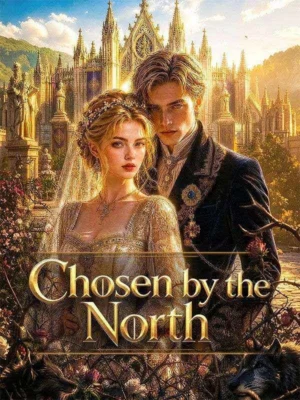
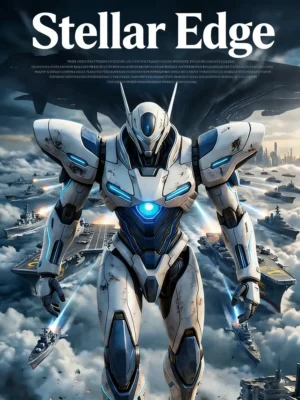
An AI drama (also called an AI short drama or AI micro drama) is a serialized story made for phones: vertical video, episodes of roughly one to three minutes, and a cliffhanger at the end of almost every one. What makes it an AI drama is how it is produced. The characters, locations and camera moves are generated with AI image and video tools instead of being shot with actors and a crew, and the script is often drafted with AI as well.
A series usually runs anywhere from about 10 to 60 episodes. The first few are free, then each episode unlocks with coins or a VIP plan. That business model comes from live-action short drama apps; AI simply made the episodes far cheaper to produce.
Why AI dramas exist: the short drama boom
Vertical short dramas were a Chinese invention long before they became an American habit. The research firm Omdia estimates the global micro drama market reached $11 billion in 2025 and will hit $14 billion by the end of 2026, with the United States expected to generate $1.5 billion of that this year, according to MIT Technology Review. DataEye adds that the US is the biggest market outside China, with about half of the revenue.
The business model explains the appeal of AI. Platforms decide what to make next from performance data, such as which themes and writers keep viewers watching, and in China a series that does not break even within a month is considered a failure, says Tang Tang, a vice president at FlexTV. When the product is a stream of cheap, fast, cliffhanger-driven episodes, a technology that cuts cost and production time is very hard to ignore.
How an AI short drama is made
Production follows a similar recipe almost everywhere:
- Write the script. Often drafted with AI, then edited by a person. One screenwriter quoted by MIT Technology Review says writers now have to describe scenes in far more visual detail, because the page has to do the job of the camera crew.
- Build the cast and sets. Image models generate reference pictures of each character, costume and location so faces stay consistent from one episode to the next.
- Generate the video. Image-to-video or text-to-video models turn each scene into a clip of a few seconds. A Beijing AI-drama producer told MIT Technology Review that studios mix Google’s Nano Banana, ByteDance’s Seedance and Kuaishou’s Kling.
- Add voices and subtitles. Synthetic or recorded voices, music and burned-in subtitles.
- Edit into episodes. The clips are cut into one-to-three-minute episodes that end on a hook.
The crew looks different too. MIT Technology Review describes AI productions as relying mainly on producers, writers, AI directors and “AI asset curators”, people who turn scripts into prompts and generate the reference images, instead of camera, lighting, makeup and effects crews. It found hundreds of Chinese job listings for the role. FlexTV’s Tang says AI can cut the roughly $200,000 cost of a North American short drama by 80% to 90%, shorten production from three or four months to under one, and shrink teams to about ten people. Those are a platform executive’s figures rather than audited numbers, but they show why the volume is so high: DataEye counted an average of 470 AI-generated short dramas released every day in January, and FlexTV stopped all traditionally shot productions earlier this year to move entirely to AI.
Kinds of AI drama you will run into
“AI drama” is used loosely, so it helps to separate four things:
- Photorealistic AI dramas. Vertical series that look like live action but are generated. This is what we list and review: ShortPeak, Sagabox and YourChannel are built on them.
- AI animation. Stylised or anime-like short dramas. Sixth Tone, citing DataEye, reports that series with AI actors made up almost 40% of the top 100 animated short dramas in January 2026, up from under 10% a year earlier. That figure is for animated dramas only, not for all short dramas.
- AI fruit dramas. A viral social-media trend of soap-opera mini-stories starring talking fruit, mostly seen on TikTok and Instagram Reels. They are free, short, and a different thing from the paywalled series on these platforms. Our page on AI fruit dramas explains the trend.
- AI twins. Adult-oriented series built around the licensed likeness of real creators. They live in the 18+ section of this site, not here.
AI dramas vs live-action short dramas
The format is the same; the cast is not. In an AI drama the characters are synthetic, so nobody is credited. Live-action apps film real performers: DramaBox’s series pages name them where they exist, and FlickReels’ catalogue is cast with real actors. Many apps carry both kinds of series, so the label that matters is on the series, not the app. Our guide to whether short drama apps are AI sorts the main ones, and are AI dramas real people explains how to tell the two apart while you watch.
Where AI dramas come from
Three web platforms supply the series we cover. YourChannel is a creator platform with a very large English catalogue. ShortPeak states in its terms that its content is produced with AI generation tools. Sagabox describes its catalogue as AI-generated vertical short films and lets you chat with AI characters. All three play in the browser with no app. Our ranking of the best AI drama apps compares them, and where to watch AI dramas explains how to get started.
What AI dramas are like to watch
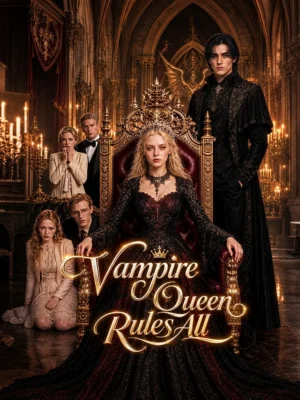
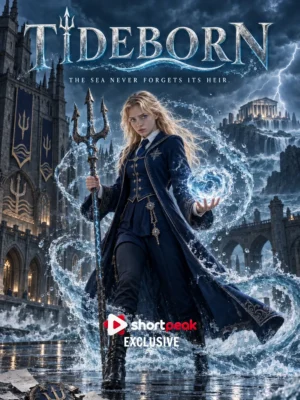
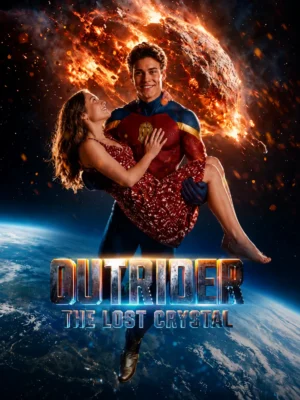
Expect the genres that work in short form: romance, mafia, fantasy, revenge and billionaire stories with a hook in the first ten seconds and a twist every episode. Good places to start are Vampire Queen Rules All, Tide Born and Outrider.
The technology has improved fast but the seams still show. Faces can drift between episodes, lettering on signs and props is sometimes gibberish, and crowds can look uniform. Most viewers stop noticing after the first episode, but if you want live-action acting this is not it.
Pros and cons for viewers
What works. Settings that would be far too expensive to film, such as dragons, space stations and ruined cities, look good in AI. Series are cheap to make, so there is a huge choice of niche genres. The hook-in-ten-seconds structure makes them easy to start and easy to stop.
What does not. Acting is flat, because there is no performer behind the face. Characters can change between episodes. The same screenwriter says that, to stop viewers scrolling away, scripts lean on shock devices like sudden deaths and betrayals and sacrifice narrative logic. And because production is so cheap, quality varies enormously: on YourChannel, which lists over 3,000 series, the best are good and the long tail is not.
The controversy: AI actors, likeness and jobs
AI dramas are not without critics. In 2026 the Shanghai company Youhug Media introduced two AI performers for a 60-episode series and was criticised online because viewers said the faces resembled real actors. A company official said the images were made without copying any real person’s facial features, and the episode raised questions about portrait rights and the future of human performers. A freelance screenwriter quoted by MIT Technology Review says two of her projects were cancelled at the contract stage and industry rates have fallen.
For viewers the practical questions are different: are you being told that it is AI, and does the series use a real person’s likeness? That is why we only list series whose AI status we have checked, and why the AI twins that reuse a real creator’s face are limited to creators who licensed it. Our guide on whether AI dramas use real people covers the checks.
Where AI dramas are heading
The format is moving from experiment to mainstream. Kunlun Tech, which runs DramaWave and FreeReels, says it now offers over 1,000 AI titles and wants AI to reach about 20% of its platform, and in July 2026 DramaBox agreed to distribute an AI-produced micro drama (see is DramaBox AI). On the audience side, a 2026 report by Holywater Tech and the consultancy Owl & Co, based on a survey of 2,737 viewers of its My Drama app, found that 89% of the users of its AI-story app My Muse said they want to see more AI-generated stories. Those are company-run surveys, so read them as a signal of direction rather than a verdict, but the direction is clear: more AI series, from more platforms, every month.
Short glossary
- AI drama / AI short drama / AI micro drama
- A serialized vertical video story whose actors and scenes are generated with AI.
- Vertical series
- The industry’s name for short dramas shot in portrait orientation for phones.
- Free episodes
- The opening episodes of a series that you can watch without paying.
- Coins
- The in-app currency used to unlock later episodes one by one.
- VIP
- A subscription that unlocks content without spending coins.
- AI twin
- An AI version of a real creator, made with their permission.
Are AI dramas worth watching?
If you already enjoy short dramas, yes: the stories are the same fast, cliffhanger-driven format, often in settings that would be too expensive to film. The risk is paying for the later episodes of a series that does not hold up, so judge it on the free ones. Our guide to free AI dramas shows how many episodes each platform gives you, and the list of new AI dramas is updated as series are added.