Explainer
Are AI Dramas Real People? How to Tell AI Actors From Real Ones
Quick answer
No: in a genuine AI drama the characters are generated, so no real actors appear on screen. The catch is that many apps mix AI series with live-action ones, and AI twins reuse a real creator's licensed likeness. Look for a cast list, an AI label and telltale glitches such as garbled text on props.
Browse 100% AI dramasThe short answer: AI actors are not real people
In a true AI drama nobody was filmed. The faces, bodies, voices and locations are generated, so there is no cast to credit and no performer behind the character. A convincing actor in an AI drama may not exist anywhere outside the video.
The confusion comes from how apps are built. Most short drama apps carry a mix of content, and “AI” can mean three different things.
Three things people mean by “AI” in a drama
- Fully AI-generated characters. The actors are synthetic. This is what the series on YourChannel, ShortPeak and Sagabox are, and it is what we mean by AI drama.
- AI twins of real creators. A real person licenses their likeness and an AI plays them in chat and in series. Candy labels these profiles as AI-generated digital twins: the person is real, the performance is not. The twins we cover are in the 18+ section, linked from the adult hub.
- Live action with AI helpers. Real actors filmed on a set, with AI used behind the scenes for subtitles, dubbing or recommendations. FlickReels, for example, advertises AI features, but the catalogue we looked at is cast with real actors.
How to tell if a short drama is AI-generated
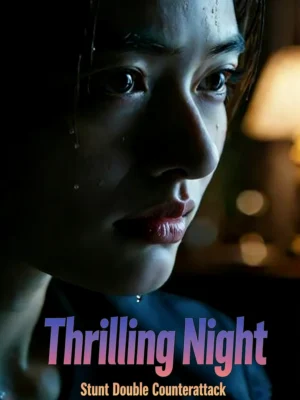
- Look for an AI label. China has required AI-generated content to be labelled since 1 September 2025, and many Chinese-made AI dramas show a small “AI生成” tag. Night of Terror has it in its first episode.
- Check the cast. Live-action series usually name their performers; DramaBox’s series pages list them where they exist. AI series almost never do.
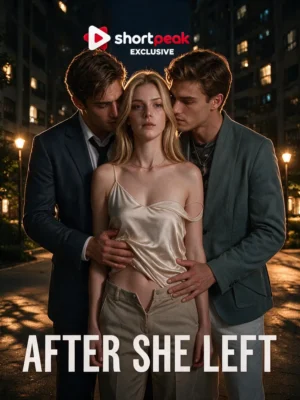
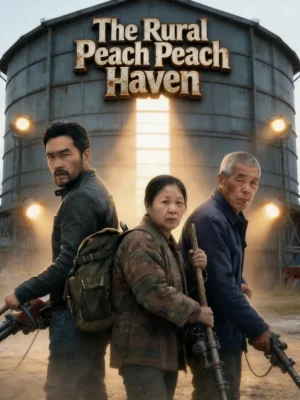
- Read the lettering. Generators still garble text. Gibberish on a sign, bag or poster is the fastest giveaway: a handbag in After She Left carries nonsense lettering, and the poster of The Rural Peach Haven repeats the word “Peach”.
- Watch hands, teeth and jewellery. Extra fingers, blurred teeth and earrings that merge into the skin are common.
- Look at the extras. Crowds where many people share the same face, and lighting that is perfect in every shot, point to generation.
- Compare episodes. A hairstyle, scar or outfit that changes between episodes is typical of AI video.
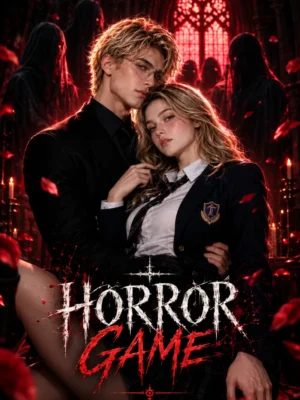
One check does not prove anything on its own. Two or three together usually settle it. Horror Game is a good practice run: the lead keeps her face, but background text and crowd scenes give it away.
How reliable is each sign?
Not every clue is equally trustworthy. This is how we weigh them when we decide whether to list a series:
| Sign | What to look for | How much it proves |
|---|---|---|
| Platform says so | “AI-generated” in the terms, store listing or home page | Strong, but only for that platform’s own catalogue |
| AI label on the video | A small “AI” or “AI生成” tag, often in a corner of the first episode | Strong |
| Garbled text | Nonsense lettering on signs, bags, posters, phone screens | Strong: cameras do not produce it |
| No cast list | No performers named anywhere | Weak: many live-action series credit nobody |
| Hands, teeth, jewellery | Extra fingers, blurred teeth, earrings fused to skin | Medium: improving fast, and it can be hidden by cropping |
| Uniform crowds | Extras who share a face or move in sync | Medium |
| Changing details | Hair, scars or outfits that differ between episodes | Medium |
| Everything looks too smooth | Perfect skin and lighting in every shot | Weak: heavy filters do the same |
A single weak sign is a hint. A strong sign settles it. Two medium signs together usually do.
Why it is getting harder to tell
The glitches above are shrinking. Image and video models improve every few months, and productions now use several of them at once, so a creator can regenerate any shot that looks wrong. At the same time studios are starting to treat AI performers as assets: in 2026 the Shanghai company Youhug Media presented two named AI actors for a 60-episode series and, according to Sixth Tone, industry commentary says they are meant to work like idols that can appear in several productions. Expect more recurring AI faces, which makes “I have seen that actor before” a poor test: a familiar face can be generated and reused, and viewers have already complained that Youhug’s pair resembled real stars, which the company denies.
What we found in the series on this site
We check the episode frames of every series before we list it. Across the three platforms we cover, the patterns were consistent:
- Labels are rare. Of the ten YourChannel series we checked, Night of Terror shows an AI tag in its first episode and most of the others carry none. ShortPeak and Sagabox disclose AI at platform level instead of on each video.
- Lettering is the best giveaway. Nonsense text on props showed up in series on every platform, for example the handbag in After She Left.
- Casts differ by platform. ShortPeak and Sagabox casts look Western, YourChannel casts mostly East Asian. That says nothing about whether the actors are real: all of them are generated.
- One series we could not settle. Evolution on YourChannel has an AI-generated poster, but its episode frames look very photorealistic and the platform does not label series, so we describe it as probably AI rather than certain. When we cannot prove it, the series page says so.
Do platforms have to tell you?
It depends where the platform is based. China has required AI-generated content to be labelled since 1 September 2025, which is why some Chinese-made series show a tag. We found no equivalent rule that forces a streaming app in the US or Europe to label each series. In practice the disclosure you get is whatever the platform volunteers: ShortPeak’s terms state that its content is made with AI tools, Sagabox describes its catalogue as AI-generated, and YourChannel does not label individual series. For mixed catalogues such as DramaBox or DramaWave, the series page is all you have, which is why the checks above matter.
Are the scripts written by AI too?
Often assisted, rarely fully automatic. MIT Technology Review reports that FlexTV, which moved entirely to AI-generated dramas, still relies mainly on Chinese writers, partly because they understand the pacing of short dramas. Many scripts are then fed into AI tools and edited by hand. You cannot tell from the screen, and no platform we reviewed discloses it, so treat “AI-generated” as a statement about the picture, and the story as human-directed unless a platform says otherwise.
Which platforms are AI and which are live action
| Platform | What we found |
|---|---|
| YourChannel | AI dramas by independent creators; series are not labelled as AI by the platform |
| ShortPeak | AI: its terms say content is produced with AI generation tools |
| Sagabox | AI: its home page calls the catalogue AI-generated |
| DramaBox | Live action on the series we checked, with performers credited |
| FlickReels | Live action; AI appears in its marketing and a co-creation tool |
The details are in is DramaBox AI and are short drama apps AI.
Are the voices real?
It varies. Many AI dramas use synthetic voices or a dub, and almost all burn English subtitles into the picture. We cannot verify the voice of every series, so treat a very flat or oddly timed voice as another hint, not as proof.